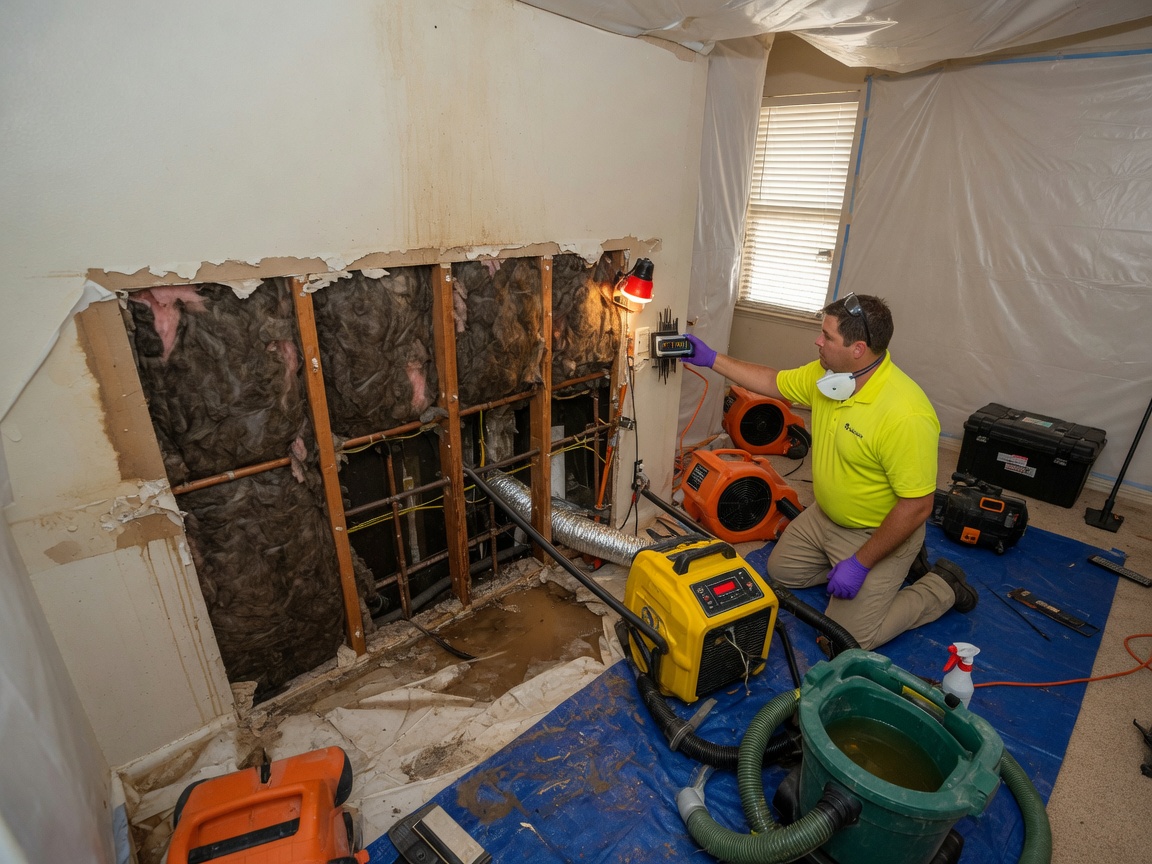
Appliance leaks in Lubbock often saturate drywall in older Tech Terrace and Downtown homes where plaster-over-lath or early sheetrock meets wood framing. High winds common in the area can accelerate surface drying while leaving hidden moisture trapped in cavities, especially during the shift from hot summers into cold winters when temperature swings drive condensation deeper into walls. Technicians must map moisture with meters and thermal imaging before opening cavities, because incomplete extraction leads to mold growth along the base plates common in South Lubbock ranch-style houses built on slab foundations.
Wall cavity drying here requires negative-air machines and directed airflow setups that account for Lubbock's frequent 20-plus mph winds pushing air through unsealed homes near Texas Tech University. Removing wet insulation without proper containment can spread particles into living spaces, and crews often coordinate with local disposal rules for saturated materials. In North Lubbock properties with limited crawlspace access, drying times extend when cold winter air reduces dehumidifier efficiency, demanding longer equipment runs and daily moisture checks to meet restoration standards.
Edge cases include leaks from refrigerators or dishwashers that travel along baseboards into adjacent rooms, saturating multiple cavities before detection. Crews verify dryness with pin and pinless meters at multiple depths, then document readings for homeowners before any wall closure. Skipping this step in high-wind zones risks hidden pockets that re-wet during the next cold front moving through from Amarillo or Abilene.
Technician insight
In Lubbock, the thing that catches most people out with Wet Drywall and Wall Cavity Drying is how the constant high winds through older Tech Terrace homes can mask trapped moisture behind baseboards during cold snaps, letting it reappear weeks later if crews do not run full-depth meter checks before closing walls.
Washing Machine Leak in South Lubbock
A washing machine supply line failed and soaked the drywall behind the appliance in a South Lubbock slab home. Hidden moisture extended into two adjacent cavities. Extraction equipment was set with wind-adjusted airflow, insulation removed, and cavities dried over three days until meter readings stayed below 12 percent.
Wet Drywall and Wall Cavity Drying Services We Offer
✓Moisture Mapping and Detection
Pin and thermal imaging scans locate hidden water in drywall and cavities after appliance leaks before any drying begins.
✓Wall Cavity Air Extraction
Negative pressure and directed airflow remove trapped moisture from stud bays without unnecessary wall demolition.
✓Drywall Dehumidification Setup
Industrial dehumidifiers and air movers sized for Lubbock wind patterns pull remaining moisture from saturated gypsum.
✓Wet Insulation Removal
Extraction of saturated batt or blown insulation from cavities to prevent long-term mold in South Lubbock homes.
✓Post-Drying Verification
Final moisture meter readings at multiple wall depths confirm cavities are dry before any repair work starts.
✓Antimicrobial Wall Treatment
Application of EPA-registered solutions inside cavities after drying to address microbial growth common in humid post-leak conditions.
Wet Drywall and Wall Cavity Drying Cost in Lubbock, TX
| Service | Typical Range | What Affects It |
|---|---|---|
| Single-wall cavity drying | $250–$450 | One affected wall with standard access |
| Multi-room cavity extraction | $600–$950 | Two or more walls plus insulation removal |
| Extended drying with monitoring | $150–$300 per day | Additional days required in cold or windy conditions |
| Verification and documentation | $100–$175 | Final meter readings and report |
Ranges are typical for Lubbock, TX and confirmed with an exact written quote before any work starts.
How it works
- 1
Initial Assessment
Technicians arrive at the Lubbock address, locate the appliance leak source, and use meters to map moisture extent in drywall and cavities.
- 2
Containment and Extraction
Plastic barriers isolate the work area while negative-air equipment pulls water from wall cavities, accounting for regional wind flow.
- 3
Equipment Placement and Monitoring
Dehumidifiers and air movers run with daily checks until readings stabilize, adjusting for cold winter temperatures or summer heat.
- 4
Final Verification and Documentation
Multiple-depth moisture tests confirm dryness, then readings are recorded before walls are closed or repairs scheduled.
Pricing
Costs depend on number of affected walls, access difficulty, and drying duration influenced by Lubbock weather.